
12 Top Sensory Play Ideas for Curious Kids

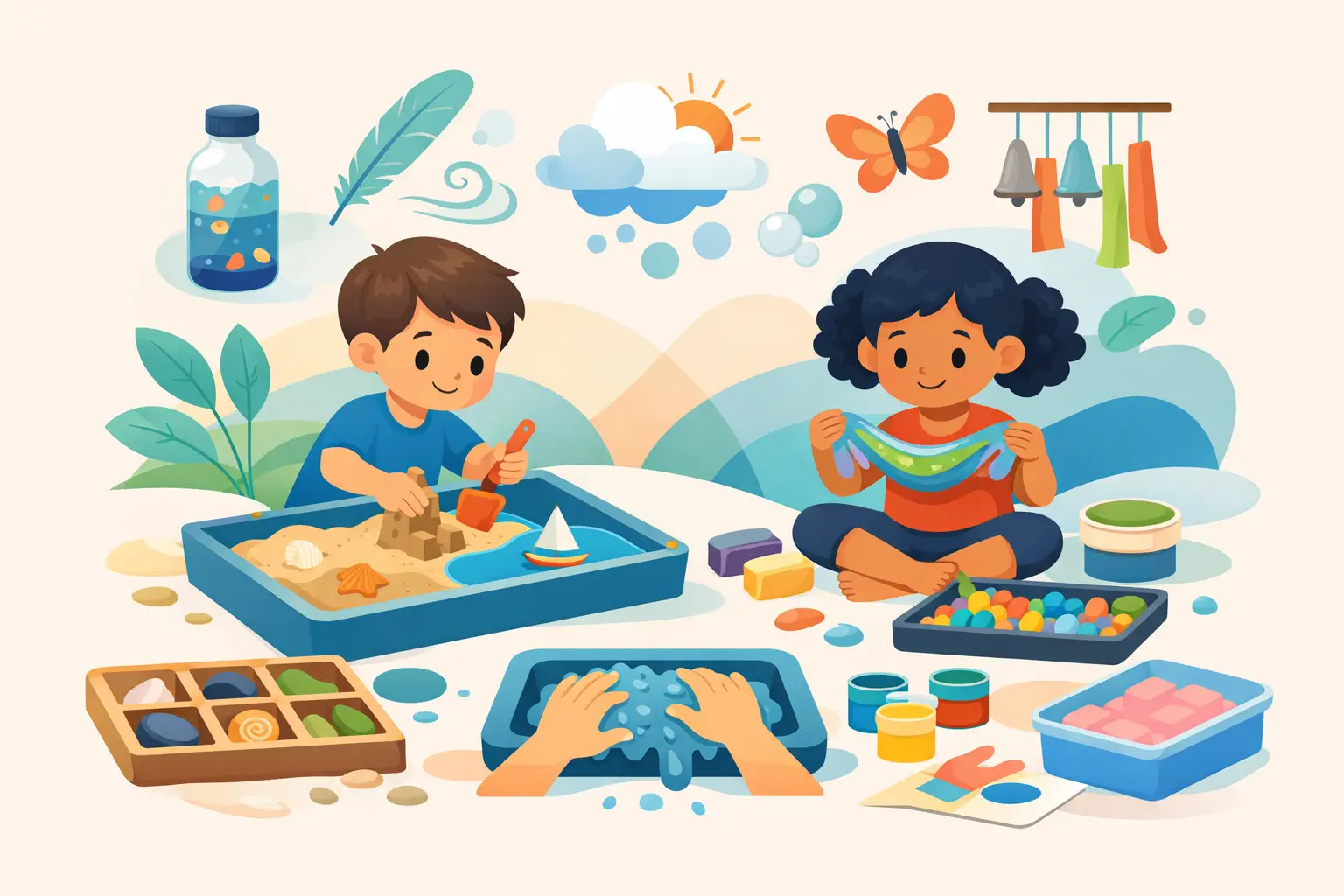
A bowl of dry oats can become a bakery, a garden bed, or a tiny landscape waiting for animal footprints. That is the quiet magic behind the top sensory play ideas: ordinary materials invite children to notice more, imagine further, and feel wonderfully at home in their own discoveries. For toddlers, preschoolers, and early elementary-aged children, sensory play is less about a perfect activity and more about having time to explore with their whole selves.
Sensory experiences support the small, meaningful work of childhood. Children practise coordination as they scoop and pour, build language as they describe sticky, cold, smooth, and squishy things, and learn to regulate their bodies through comforting repetition. Just as importantly, open-ended materials give children room to lead. There is no single right way to make a mud pie, arrange translucent tiles, or send a pom-pom floating through a water channel.
Top Sensory Play Ideas for Everyday Wonder
The best invitations are simple enough to begin without much preparation, yet generous enough to hold a child’s attention. Start with one or two materials, observe what your child does, and add something only when the play asks for it.
1. A water-pouring station
Place a shallow bin or tray on a towel with cups, a small pitcher, ladles, sponges, funnels, and a few waterproof toys. Water play offers immediate feedback: it splashes, streams, drips, and disappears into a sponge. Children can experiment with full and empty, fast and slow, heavy and light without needing a lesson attached.
For younger children, keep the water level very low and stay close throughout. An older child may enjoy adding ice cubes, a little dish soap for bubbles, or washable watercolour to create a changing pool of colour.
2. Cloud dough for squeezing and shaping
Cloud dough has a soft, sandy texture that holds its shape when pressed and crumbles when released. It can be made with a simple taste-safe recipe suited to your child’s age, or replaced with a store-bought modelling material if that feels easier. Offer small bowls, wooden spoons, cookie cutters, and loose natural objects such as smooth stones or pinecones.
This is a lovely choice for children who enjoy tactile play but find wet, sticky materials uncomfortable. Sensory preferences are real. An invitation is never a test, so let a child use a tool, touch with one finger, or simply watch before joining in.
3. Coloured rice small worlds
A tray of coloured rice can become a construction site, woodland, fairy village, or dinosaur dig. Add a few figures, small scoops, cardboard tubes, and containers, then step back. The rice creates a gentle sound as it moves and gives small hands satisfying work as they bury, uncover, transfer, and fill.
Because small loose parts can be a choking risk, choose larger materials and provide close supervision for children who still mouth objects. For some families, large dried pasta, fabric scraps, or crumpled paper may be a better fit than rice.
4. Nature soup in a mud kitchen
After rain, a bowl, spoon, water, leaves, petals that have already fallen, and a little soil are enough to create a feast for imaginary guests. Outdoor sensory play has an openness that indoor projects cannot always offer. There is room for mess, for big arm movements, and for the changing textures of the season.
Invite children to make a menu, collect ingredients, or deliver their soup to a stuffed animal café. Avoid asking them to pick living plants or taste their creations. The point is not the recipe. It is the ownership, storytelling, and happy seriousness of making something from the earth.
5. A barefoot texture path
Arrange a short path of distinct textures in sturdy shallow trays: a folded towel, a yoga mat, smooth pebbles, dry leaves, bubble wrap, or a soft rug. Children can walk, crawl, hop, or guide toy animals along the route. This turns sensory exploration into whole-body movement, which can be especially inviting for children who have been indoors for a long stretch.
Keep the path stable and comfortable rather than challenging for its own sake. Some children will love the surprise of each surface; others will prefer socks, a hand to hold, or a chance to explore each tray with their hands first.
6. Ice rescue play
Freeze small age-appropriate objects in a container of water, then offer warm water in droppers or squeeze bottles, child-safe tools, and a tray to catch the melt. Children become patient investigators as they watch ice change from solid to liquid. They may tap, drip, wait, and revise their ideas.
Use only objects that are safe for your child’s age and never expect them to free everything quickly. The slow reveal is part of the experience. On a warm day, this activity can move outdoors and become an unexpectedly peaceful pause.
7. Light, shadows, and translucent colour
Set a torch behind a sheet, use a bright window, or place translucent tiles and coloured cellophane on a light surface. Children can layer colours, trace shadows, make silhouettes with their hands, or build a glowing city. Light play feels almost theatrical, yet it requires very little.
This is a beautiful lower-mess option for a quiet afternoon. It also creates a natural bridge into art-making: offer paper and crayons nearby so children can draw the shapes and colours they notice.
8. A scent garden invitation
Gather gentle, familiar scents such as citrus peel, mint, cinnamon sticks, rosemary, vanilla, or lavender sachets. Place each in a small container and invite children to smell, sort, describe, and pair them with coloured paper or drawing materials. Ask, “Which one reminds you of a kitchen?” or “Which scent feels like a rainy day?”
Keep fragrances mild and optional. Some children are highly sensitive to smell, and strong essential oils are not necessary for rich sensory play. Familiar kitchen and garden ingredients are often more than enough.
9. Playdough with a purpose
Rather than presenting playdough as a craft with an expected outcome, offer it as a material for invention. Add rolling pins, garlic presses, natural textures, buttons, toy vehicles, or alphabet stamps. A child might make a birthday cake, a road system, tiny nests, or a long snake that needs a home.
The repetition of rolling, pinching, and pressing builds hand strength for future drawing and writing. Yet children do not need that developmental explanation to enjoy it. They only need permission to make, squash, remake, and begin again.
10. Sound baskets and rhythm play
Fill a basket with safe objects that make different sounds: wooden blocks, metal measuring cups, a shaker, a small drum, paper, bells, and fabric. Children can compare loud and quiet, quick and slow, sharp and soft. Together, you might create a rainstorm, a parade, or a lullaby for a favourite toy.
Sound play can be joyful, but it can also become overwhelming. A defined play period, soft furnishings, and a quiet option nearby help keep the experience comfortable for everyone in the room.
11. Collage with touch at the centre
Offer a base of sturdy paper or cardboard alongside fabric pieces, yarn, tissue paper, foil, corrugated cardboard, felt, and nature finds. A collage does not need to resemble anything. It can be a map of textures, a pretend window, or a picture built from a child’s favourite feelings.
For toddlers, glue sticks and large pieces reduce frustration. Older children may enjoy cutting, layering, and telling a story about their finished work. Displaying the result at their eye level tells them their choices matter.
12. A calm sensory nook
Not every sensory invitation needs movement or mess. A small corner with cushions, a soft blanket, a few books, a sensory bottle, and a basket of comforting objects can offer a place to reset. Children may visit it after energetic play, while waiting for dinner, or when the day simply feels too full.
A calming nook works best when it is not framed as punishment. It is a welcoming place to listen to the body, take a breath, and return to play when ready.
Let the Child Lead the Sensory Play
Parents often feel pressure to keep an activity exciting, but boredom can be the doorway to deeper play. If your child pours water between the same two cups for ten minutes, that is not a lack of imagination. It may be exactly the focused experiment they need. Stay nearby, name what you see, and resist the urge to direct every next step.
It also helps to think in invitations rather than projects. A project asks for a result. An invitation says, “Here are some beautiful possibilities.” At Liliput Playhouse, that freedom is part of what makes shared play feel meaningful: children are trusted to create, move, and imagine in ways that belong to them.
A Few Gentle Safety and Cleanup Notes
Choose materials with your child’s age, habits, allergies, and sensory needs in mind. Supervise water, small parts, food-based materials, and anything that could be put in a mouth. Wash hands after messy play, use a washable mat or shower curtain for easy cleanup, and keep a damp cloth close rather than interrupting the moment at the first spill.
Most of all, keep the scale manageable. One tray, one material, and twenty unrushed minutes can hold more possibility than an elaborate setup. Childhood does not need to be constantly entertained. It deserves space to touch, wonder, make a little mess, and discover that the world is full of things worth noticing.


Comments