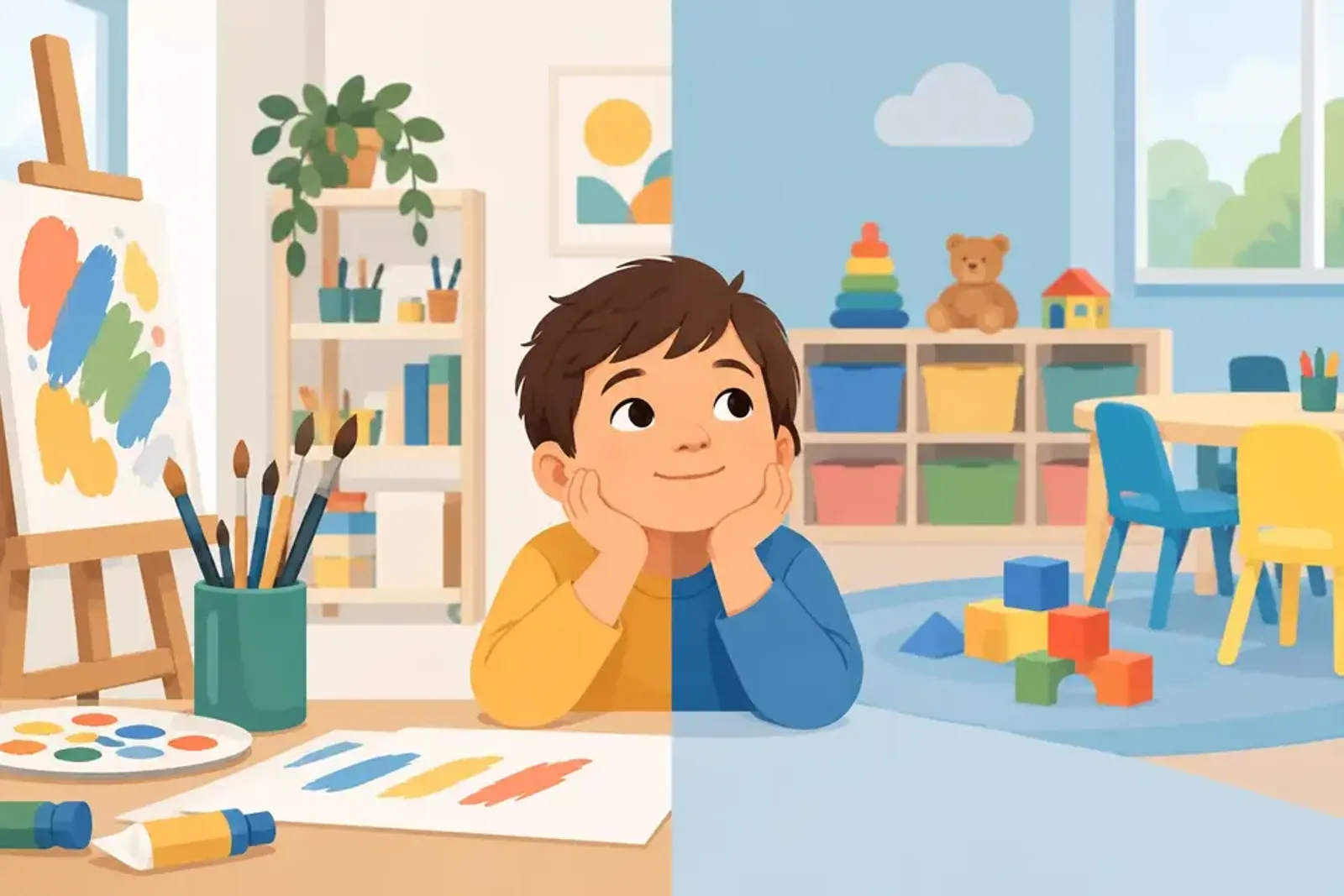
A rainy Tuesday morning can make the question feel especially urgent: should your child spend more time in daycare, or would an art studio offer something they are missing? Art studio versus daycare is not a contest with one winner. These settings are built for different rhythms of childhood, and the right choice depends on what your family needs from the hours your child spends away from home.
For some children, a reliable full-day routine is the foundation that lets them flourish. For others, a weekly creative class or a slow afternoon of open-ended play becomes the place where their inner world has room to appear. Often, the most nourishing answer is not either-or. It is a thoughtful combination.
Art Studio Versus Daycare: Different Purposes
Daycare is, first and foremost, care. A quality program supports children through the practical architecture of their day: arrivals, meals, rest, toileting, outdoor time, friendships, transitions, and comfort when feelings run high. It gives parents and caregivers dependable coverage for work, appointments, and the many responsibilities of family life.
Within that structure, children may encounter music, sensory activities, painting, stories, and group projects. These experiences matter. Yet daycare must serve the needs of a group across many hours. Its creative activities are usually one part of a broader day designed around safety, routine, and responsive care.
An art studio or play-based creative program begins from a different place. Its purpose is not to replace daily care but to make space for exploration. The invitation might be clay pressed between small hands, a room transformed by loose parts and light, paint mixed into an unexpected shade, or a large sculpture that asks a child to climb, balance, and invent a story.
In a thoughtfully designed studio, process matters more than a matching finished product. Children can follow an idea, change their minds, make a mess, begin again, and see that their own choices have value. That freedom can be deeply restorative, especially in busy family weeks filled with schedules and instructions.
What Daycare Can Offer a Growing Child
A consistent daycare environment can be a beautiful place for children to build trust outside their family. Familiar educators learn a child’s cues. Friends become part of the weekly rhythm. Repeated routines help children understand what comes next, which can ease anxiety and support growing independence.
For toddlers and preschoolers, the ordinary moments are developmental work. Waiting for a turn at the sink, helping put toys away, asking for more water, settling beside another child at circle time - these are small acts of belonging. A child who thrives on predictability may feel secure in the dependable cadence of a full-day program.
Daycare can also be the most practical choice when parents require regular care. There is no need to romanticize an arrangement that leaves a family overstretched. Children benefit from adults who are less rushed and more present, and reliable childcare can make that possible.
Still, daycare is not identical everywhere. Group size, educator continuity, outdoor access, daily schedule, philosophy, and the time given to free play can vary widely. A tour is useful, but observing how adults respond to children’s questions, conflicts, and quiet moments often tells the fuller story.
What an Art Studio Makes Possible
Creative spaces offer a different kind of social learning. Rather than asking every child to make the same seasonal craft, an open-ended studio might place materials within reach and let each child decide what they are becoming. One child creates a tiny world from fabric scraps. Another experiments with the sound of wooden blocks. A third watches for ten minutes before joining in.
That watching counts. So does wandering, repeating, and working seriously at a project no adult would have predicted. Children do not always need more stimulation. They often need environments rich enough to hold their attention without telling them exactly what to do.
Art experiences can strengthen fine-motor skills, language, persistence, planning, sensory awareness, and confidence. More quietly, they give children a way to communicate when words are not quite enough. A swirl of dark paint, a tower built and rebuilt, a dramatic story acted out with found objects - each can carry feeling, memory, and imagination.
At Liliput Playhouse, this idea lives in the belief that play can be artistic, meaningful, and open-ended. A well-made play or studio experience respects the child as a creator, not simply a participant being entertained.
The Practical Questions Behind the Choice
The most useful decision begins with a clear look at your family’s needs. If you need care from morning to late afternoon while you work, a weekly art class cannot solve that logistical reality. Daycare, a home-based provider, or a nanny share may be the essential foundation.
If your child already attends daycare, the question may be less about replacement and more about balance. Does their week include enough unhurried time to move, make, imagine, and lead their own play? A short art program, drop-in play session, or seasonal camp can offer a welcome change of pace without adding another demanding commitment.
Consider your child’s temperament, too. A highly social child may delight in a full room of peers and the familiar rituals of daycare. A child who becomes overwhelmed by long group days may benefit from smaller, shorter creative experiences where they can work at their own pace. Neither response is a problem to fix. It is information to honour.
Age matters as well. Younger toddlers may need a caregiver nearby to feel safe enough to explore, while older preschoolers often gain confidence from attending a gentle class independently. Before enrolling, ask whether a program is caregiver-accompanied, how transitions are handled, what supervision looks like, and whether children can take breaks when they need them.
Choosing a Creative Program With Care
Not every art class offers the same experience. Some focus on instruction and finished projects, which can be satisfying for children who enjoy clear goals. Others are more exploratory, giving children access to varied materials and room for self-direction. Neither is automatically better, but they serve different needs.
Look for a space that treats materials with respect and children with patience. Are children invited to make choices? Is there room for movement as well as table work? Do educators describe what children are doing rather than rushing to praise every outcome? Are mess, experimentation, and imperfect ideas welcomed?
For Toronto families, the setting itself can make a difference during long winters or humid summer days. Indoor play does not have to mean bright plastic, noise, and hurried consumption. A warm, beautifully considered space can become a small refuge: somewhere children stretch their bodies, encounter texture and colour, and spend time with the people who care for them.
It is also wise to protect your calendar. A child who is already managing long days in care may not need a packed schedule of enrichment. One meaningful weekly ritual can be more valuable than several activities that leave everyone tired. Leave room for home, boredom, neighbourhood walks, and the unfinished games children return to on their own.
When Both Belong in a Child’s Week
For many families, daycare provides the dependable rhythm and an art studio provides a creative counterpoint. A child might spend weekdays with trusted educators, then visit a play studio on a weekend with a parent or grandparent. That shared experience can open a different kind of conversation: What did you build? How did that feel? What should we try next time?
The value is not only in the activity. It is in being seen while exploring. When adults slow down enough to notice a child’s ideas, children learn that their curiosity is worth following.
The best choice is the one that supports your family’s real life while leaving room for childhood to be spacious, sensory, social, and wonderfully unfinished. Whether care, creative play, or a blend of both is right for this season, let your child’s growing sense of wonder be part of the decision.