
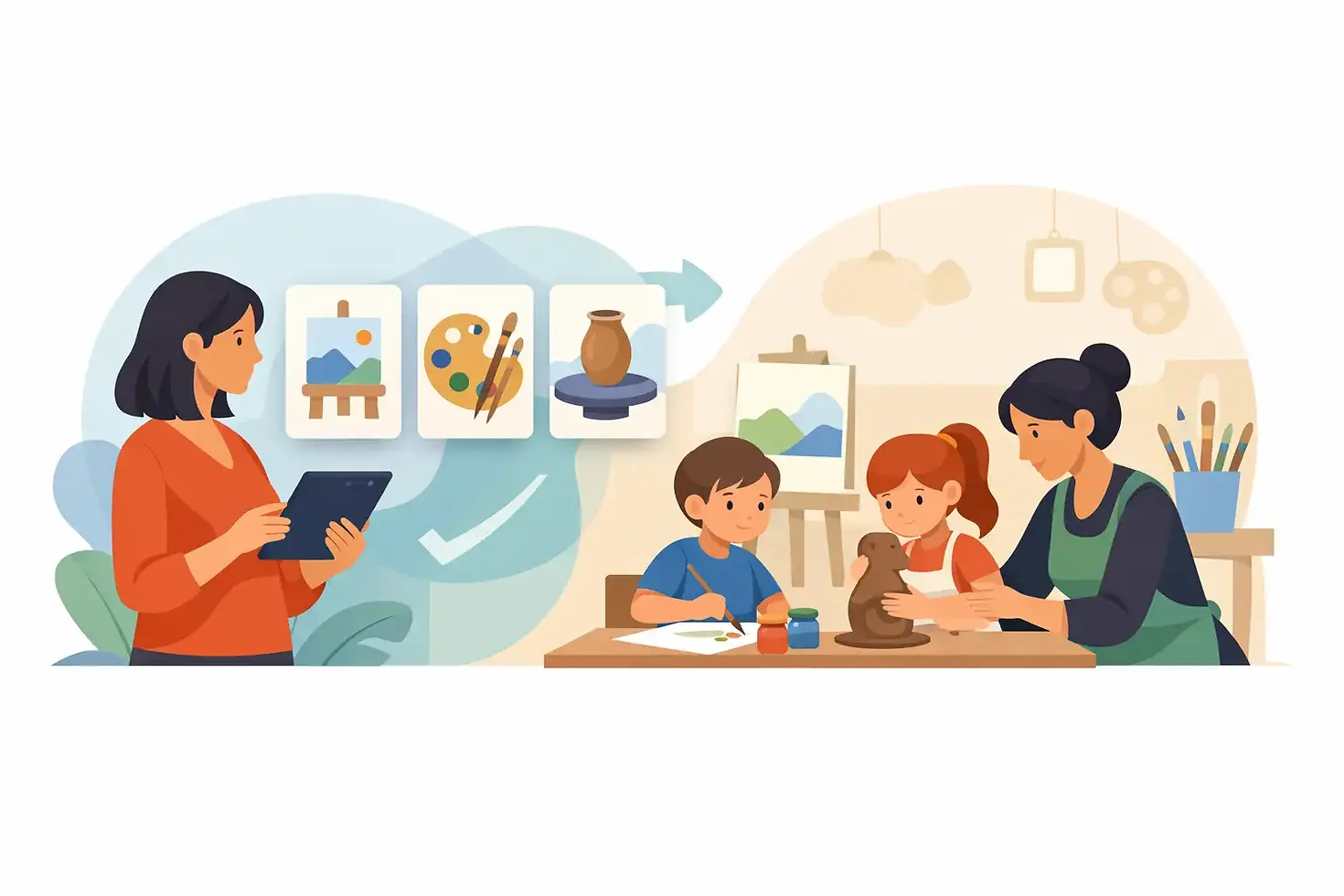
How to Choose Art Classes for Kids

A child comes home with paint on their sleeve, a cardboard creature in their hands, and a story you did not expect. Not just, “I made this,” but, “This dragon lives in a forest and collects moonlight.” That is often the real gift of art classes for kids - not only the finished piece, but the thinking, feeling, and self-expression that quietly bloom along the way.
For many families, the search begins with a practical question. What class will my child enjoy after school or on the weekend? But beneath that is a deeper hope. Parents are often looking for a space where their child can feel capable, curious, and free to try something without pressure. The best art experiences offer exactly that. They make room for process, personality, and joy.
Why art classes for kids matter
Art gives children a language before they always have the words. Through colour, texture, shape, and mark-making, they work through ideas, emotions, and sensory experiences in a way that feels natural. A toddler pressing paint with both hands is learning something different from an older child sketching a house from memory, but both are building confidence through creation.
There is also a developmental side that matters. Art supports fine motor skills, visual observation, decision-making, patience, and flexible thinking. Just as importantly, it nurtures a child’s sense of authorship. They begin to trust their own ideas. In a world that often asks children to follow directions, art can be one of the few places where their instincts lead.
That does not mean every child needs a highly structured studio program or formal technique lessons right away. In fact, for young children especially, too much emphasis on product can flatten the experience. A carefully chosen class should meet children where they are, with enough guidance to inspire and enough openness to let them experiment.
What to look for in art classes for kids
The strongest classes are not always the ones with the longest supply list or the most polished take-home projects. What matters more is the feeling in the room. Is it calm, welcoming, and thoughtfully prepared? Do children seem absorbed rather than rushed? Are educators guiding with warmth rather than correcting every detail?
A good program balances structure and freedom. Children need a loose frame - perhaps a material to explore, an idea to respond to, or a technique to try. But within that frame, there should be space for interpretation. If every child’s artwork looks nearly identical at the end, that is usually a sign that the process was too controlled.
Parents should also pay attention to age fit. Toddlers and preschoolers benefit from sensory-rich, open-ended experiences with simple prompts and lots of hands-on exploration. Early elementary-aged children may be ready for longer projects, storytelling through art, and exposure to new materials. A mixed-age group can work beautifully in some settings, but only if the program is designed with care.
Environment matters too. Children create differently when a space feels beautiful, safe, and intentional. Natural light, accessible materials, and room to move all shape how a child engages. In the right setting, art does not feel like a task added onto the day. It feels like an invitation.
Process art or skill-based instruction?
This is where many parents feel unsure, and the answer is often: it depends on the child.
Process-based art focuses on exploration. Children mix colours, test textures, build unusual forms, and follow their own ideas. This approach is especially powerful for younger children because it protects curiosity. It says that the experience of creating matters as much as the result.
Skill-based instruction has its own value. Older children, or children who are asking for more challenge, may love learning how to draw faces, work with clay tools, or understand composition. Technique can deepen confidence when it is taught in a gentle, encouraging way.
The best programs often blend both. A child might learn a new method, then use it freely. They might be shown how watercolour behaves on paper, then invited to interpret a garden, a storm, or an imagined world in their own way. That combination keeps art alive. It helps children build ability without losing wonder.
Signs a class is the right fit for your child
You know your child better than anyone, but certain clues can help.
If your child is cautious, look for a class with patient educators, predictable rhythms, and low-pressure invitations to participate. If your child is highly active, a program that includes movement, sensory play, or a more immersive environment may be a better match than one that expects long periods of seated focus. If your child already loves drawing or making, they may be ready for a class that introduces richer materials and a bit more technique.
It also helps to notice what your child talks about after class. Do they mention a feeling, a material, or an idea they want to try again at home? That is often more meaningful than whether they produced something frame-worthy. Engagement is not always loud. Sometimes the clearest sign of a good fit is a child returning to the experience in their own quiet way.
Another overlooked factor is transition. Some children need time to settle into a new environment. A class can still be a wonderful fit even if the first session feels tentative. What matters is whether the space feels supportive enough for trust to grow.
What parents in Toronto often need from a program
For families in Toronto, practical needs are real. Weather changes plans, schedules fill quickly, and parents want experiences that are genuinely worth leaving home for. Art classes work best when they support family life rather than complicate it.
That may mean choosing a program in a thoughtfully designed indoor setting, where children can create comfortably through winter, rain, or summer heat. It may mean looking for a class that feels enriching without being overly rigid after a full school or daycare day. For younger children especially, a warm and welcoming atmosphere can make all the difference.
Many families are also looking for more than instruction. They want places where children are treated with respect, where creativity is not rushed, and where the environment itself reflects care. That is part of why intentionally designed arts spaces stand apart from more generic children’s programming. They tend to hold both the child’s developmental needs and the family’s standards for quality in the same frame.
At Liliput, that philosophy lives in the belief that childhood deserves authenticity, freedom, and meaningful artistic experiences. For families seeking a class that feels both nurturing and inspiring, that kind of intention matters.
Questions worth asking before you register
Before choosing a program, ask how the class is structured and what the educators value. Are children encouraged to explore materials in their own way? Is the focus on creativity, technique, or a blend of both? How does the class support different temperaments and developmental stages?
It is also useful to ask about group size. Smaller groups often allow for more individual attention, especially with younger children. Ask what materials are used and whether the projects change from week to week. Repetition can be comforting, but variety keeps children engaged.
Finally, trust your own response. When you read the class description or walk into the space, do you feel at ease? Does it sound like a place where your child can be fully themselves? Parents often know quickly when something feels aligned.
The quiet value that lasts beyond the class
The effects of a good art class rarely stay contained within that one hour. They follow children home in subtle ways. A child who once hesitated may begin choosing colours boldly. Another may start building more elaborate imaginary worlds. Someone who struggled to express a feeling might begin drawing it first.
Art does not need to lead to expertise to be worthwhile. Its value is often more personal than that. It gives children a place to notice, invent, take risks, and make meaning. It reminds them that ideas can begin with their own hands.
When you choose art classes for kids, you are not only filling an afternoon. You are offering your child a thoughtful kind of time - time to wonder, to experiment, to make something real from the life of their imagination. And for many children, that is where confidence begins.



Comments