A child who has carefully carried a pretend loaf of bread to a market stall, negotiated a role in a tiny theatre, or transformed scraps into a creature has done much more than “had fun.” These school visit learning examples reveal the quiet, powerful work of childhood: testing ideas, reading social cues, using the body with purpose, and finding the confidence to contribute.
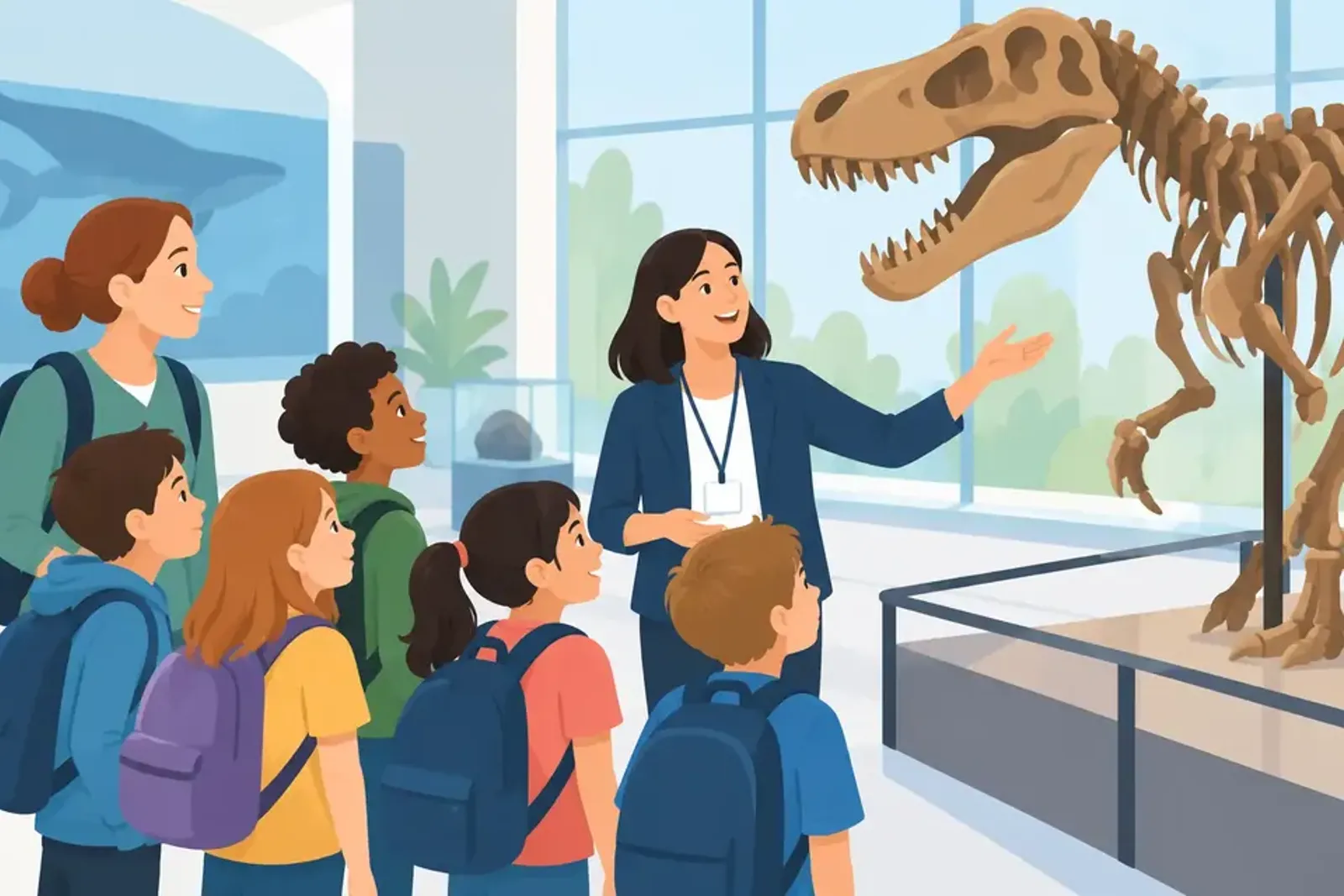
For educators, a field trip is most meaningful when it gives children something they cannot simply receive from a worksheet or a screen. It should offer room to move, materials to touch, questions without one correct answer, and experiences that children can carry back into the classroom.
What Meaningful Learning Looks Like on a School Visit
Learning during a visit does not need to look like a formal lesson to be real. In early childhood and the primary years, children often make sense of the world through play first. They rehearse everyday experiences, build stories together, observe what others are doing, and revise their plans when something does not work.
A thoughtfully designed play and art environment supports this process because it invites participation at many levels. One child may enter a space ready to lead a dramatic game. Another may watch from the edge, then join by arranging objects or adding a drawing. Both are learning. The goal is not to make every child perform in the same way. It is to create conditions where each child can be present, capable, and curious.
The strongest visits balance freedom with gentle structure. Too much direction can turn an imaginative experience into a series of tasks. Too little preparation can leave children unsure of how to enter the space. A simple invitation, a clear rhythm, and time to follow their own ideas usually create the richest results.
School Visit Learning Examples Across the Curriculum
Imaginative play builds language and social understanding
When children enter a play world that includes homes, shops, kitchens, workshops, stages, or nature-inspired spaces, they begin to create shared stories. A group might decide they are running a café, caring for baby animals, preparing for a journey, or building a neighbourhood. In doing so, they practise vocabulary that belongs to real life: ingredients, tools, directions, schedules, feelings, and responsibilities.
They also learn how language works between people. “Can I be next?” “We need more chairs.” “What happens after the storm?” These small exchanges require listening, responding, compromising, and explaining an idea clearly enough for someone else to join it. For a child who is learning English, dramatic play can be especially welcoming. Gestures, objects, and actions offer a bridge into conversation without the pressure of a right answer.
A teacher might extend the experience back at school by inviting children to draw a map of their shared world or dictate a page for a class story. The visit supplies lived details that make later literacy work feel personal.
Open-ended art makes thinking visible
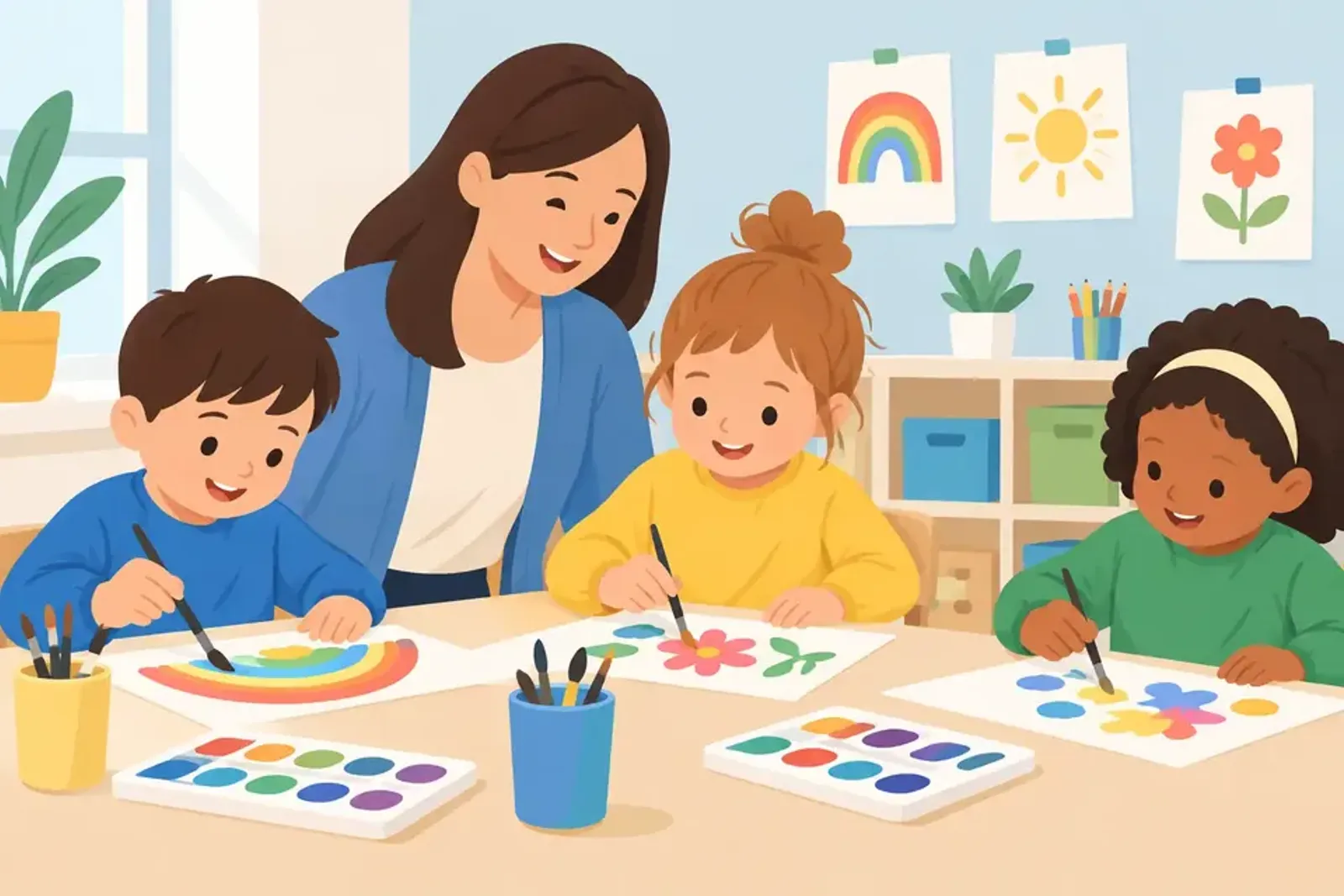
Art experiences during a school visit can offer something different from a product-led craft. When children can choose materials, experiment with colour, combine textures, and change direction midway through, they make decisions that belong to them. A cardboard tube can become a telescope, a tower, a creature, or the start of an entirely new story.
This process builds creative confidence, but it also develops early scientific and mathematical thinking. Children compare lengths, test balance, notice how wet paint moves differently than dry pastel, and solve practical design problems. If a structure keeps falling, they may widen the base. If a mark is too faint, they may layer colour. The learning is immediate because it matters to the child’s own idea.
The adult’s role is not to decide what the work should become. It is to notice effort and ask spacious questions: “What are you trying next?” “How did you make that part stand?” “What does this material remind you of?” These prompts honour children as artists and thinkers.
Movement supports self-regulation and spatial awareness
A visit that includes climbing, balancing, crawling, rolling, carrying, or navigating immersive play sculptures invites children to learn through their whole bodies. Movement is not a break from learning. It is often how young children organize attention, release energy, assess risk, and understand where they are in relation to other people and objects.
Consider a child planning how to cross an uneven surface. They are judging distance, shifting weight, strengthening coordination, and making a decision about what feels safe. When they pause to let another child pass, they are practising awareness and care. When they try again after slipping or changing their mind, they are building resilience.
This kind of learning depends on the child, the group, and the environment. Some children need energetic movement before they can settle into art or conversation. Others need time to observe before trying a new physical challenge. A welcoming visit makes space for both rhythms rather than treating one as better.
Collaborative building introduces early engineering
Loose parts, blocks, fabric, natural materials, and large-scale construction elements encourage children to think like designers. A group building a shelter, bridge, vehicle, or imaginary city must make a plan, even if it changes every few minutes. They encounter questions of stability, scale, sequence, and purpose without needing technical vocabulary at the outset.
Collaboration is often the deeper lesson. Children discover that a large idea may require many hands, and that different contributions matter. One child may gather materials, another may test the structure, and another may invent the story that gives it meaning. When a tower falls, the group has an authentic reason to reflect, adapt, and begin again.
Helping Children Carry the Experience Back to School
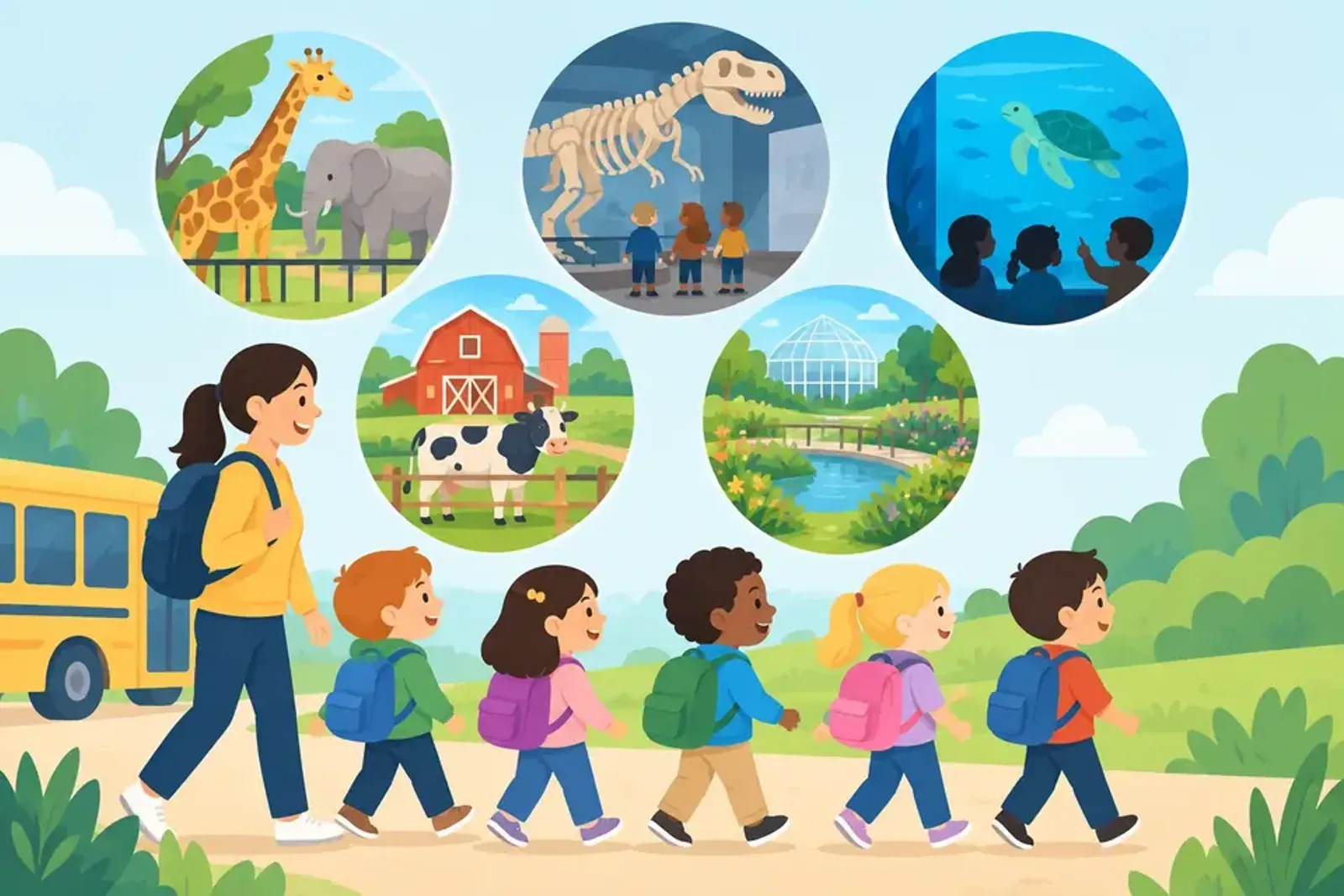
The visit becomes more valuable when it is not treated as a one-time outing. Before arriving, teachers can introduce a loose theme such as “How do places help people?” or “What can we make with ordinary materials?” The question should be broad enough to welcome unexpected discoveries.
During the visit, photographs of children’s creations, short observations, or a few dictated quotes can help preserve their thinking. Documentation should not interrupt play at every moment. A handful of meaningful records is more useful than trying to capture everything.
Back in the classroom, reflection can be brief and lively. Invite children to share a moment when they felt proud, surprised, challenged, or connected to someone else. For younger groups, this might happen through drawing and conversation. Older children can create labels, maps, storyboards, or simple design plans inspired by what they explored.
Useful prompts include:
- What did you notice that you had not noticed before?
- What problem did you solve with someone else?
- Which material or space gave you a new idea?
- What would you change if you could return tomorrow?
These questions do not ask children to prove they learned. They help children recognize themselves as people who can observe, imagine, and grow.
Choosing a Setting That Respects Childhood
Not every field trip needs to be loud, fast, or packed with activities. For toddlers, preschoolers, and early elementary students, a beautiful, thoughtfully paced environment can be more memorable than a day of constant stimulation. Look for a setting where play is taken seriously, where materials invite genuine exploration, and where staff understand that children need both boundaries and freedom.
Practical details matter too. Schools need clear arrival plans, age-appropriate spaces, enough room for groups to move comfortably, and facilitators who can support rather than rush the experience. The ideal format depends on class size, developmental stage, sensory needs, and the learning goals already taking shape in the classroom.
At Liliput Playhouse, school visits can become a gentle meeting place for imagination, art, movement, and belonging. The most lasting learning may not be the object a child brings home. It may be the feeling of having an idea, sharing it with others, and discovering that there is room in the world for what they make next.